

Sep
distributed by Audio Chocolate, General News, Mixing Consoles, New Product Announcements, Product News, recording studio gear, Videos
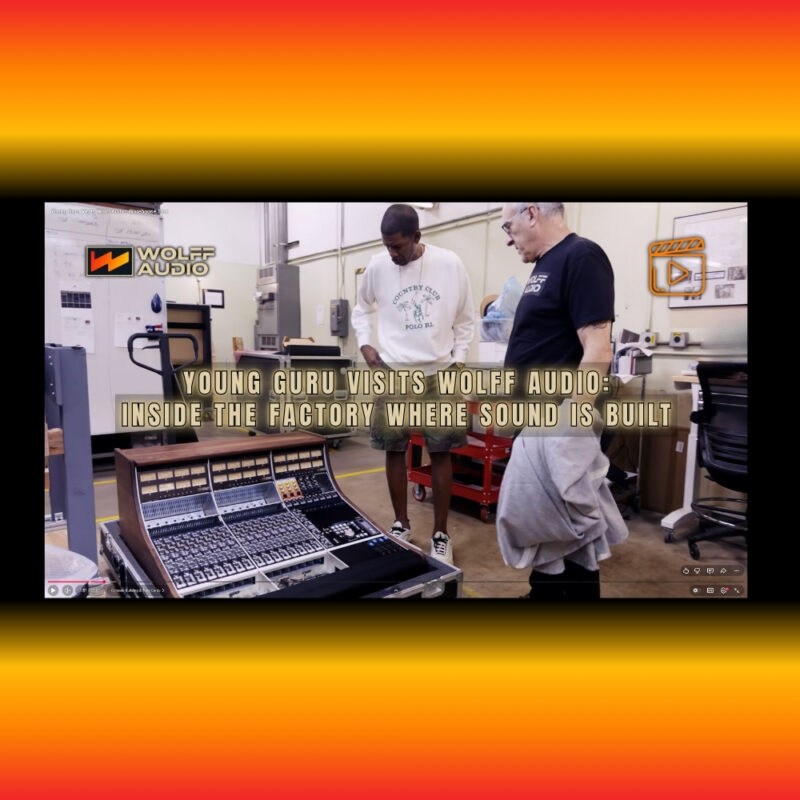
Young Guru Visits Wolff Audio: Inside the Factory Where Sound Is Built
Young Guru Visits Wolff Audio: Inside the Factory Where Sound Is Built
Where Four Decades of Analog Expertise Meet Modern Studio Innovation
What does it really take to build world-class analog and digitally controlled studio equipment? In a fascinating behind-the-scenes visit, renowned engineer and producer Young Guru joins legendary designer Paul Wolff at the Wolff Audio facility in Santa Barbara, offering a rare look at the people, processes and engineering philosophy behind professional studio equipment.
With more than 40 years of analog design experience between the worlds of recording, mixing and studio technology, Paul Wolff has played a significant role in shaping the equipment used by generations of audio professionals. Young Guru, meanwhile, has spent decades pushing studio technology to its limits. Bringing the two together creates a unique conversation about what genuinely matters when designing equipment for demanding professional environments.
Inside the Wolff Audio Factory
The factory tour takes Young Guru through the different stages of Wolff Audio‘s manufacturing process, from the shipping area and console building through to the paint booth, woodworking facilities, machine shop, parts storage and testing laboratories.
The tour provides an unusually detailed look at how professional studio equipment moves from design concept to finished product, while highlighting the importance of construction quality, component selection, testing and quality control at every stage.
Engineering Is in the Details
One of the most revealing aspects of the tour is the attention given to the details that may never be visible once a product is installed in a studio. Automated PCB assembly, relay-board testing, inspection and audio verification all form part of a carefully controlled manufacturing process designed to ensure reliability as well as performance.
For Wolff Audio, professional-grade equipment isn’t simply about adding features. Every design decision has a purpose, from the choice of components and transformers to the way signal paths are routed and tested.
Watch Young Guru’s Wolff Audio Factory Tour
The best way to appreciate the thinking behind the Console ST is to see where it comes from. Young Guru‘s tour provides a fascinating look at the people and processes behind Wolff Audio, from console construction and woodworking to PCB assembly, testing and final audio verification.
🎥 Watch the Full Young Guru Visits Wolff Audio Warehouse Tour: ⤵️
From the Factory Floor to the Console ST
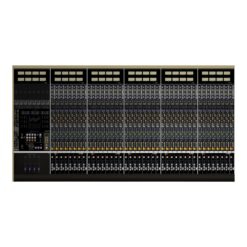
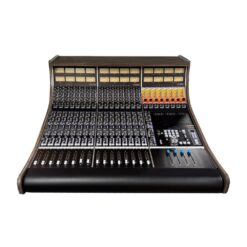
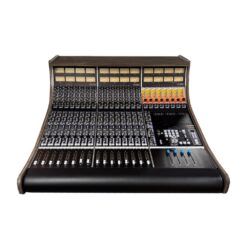
The manufacturing philosophy seen throughout the tour comes together in the Wolff Audio Console ST — a fully modular analog console designed to combine classic console architecture with a modern studio workflow.
Every Console ST frame is hand-built at Wolff Audio‘s Santa Barbara facility, then signal-verified and configured to specification before it leaves the factory. The result is a console designed around the requirements of the individual studio rather than forcing every engineer into a fixed configuration.
Classic Analog, Modern Workflow
The Console ST distils more than four decades of console design experience into a flexible, highly configurable platform. Its architecture combines traditional analog signal paths with modern DAW integration, giving engineers the tactile workflow of a large-format console while accommodating contemporary production environments.
DAW Mode mirrors the classic inline-console approach, allowing engineers to switch naturally between tracking and mixing workflows. Summing Mode can also expand the number of available inputs dramatically, making the Console ST equally compelling for hybrid mixing environments.
Three Approaches to Analog Summing
The Console ST offers three different analog summing approaches, giving engineers the ability to choose the character that best complements their production.
CAPI options provide classic American-inspired tone, while IC-based summing offers a cleaner modern character. Tonelux summing introduces a distinctly British-inspired sonic flavour, allowing the console’s tonal personality to be tailored to the needs of the studio and the music.
Mix Bus Tone Cards: Shape Your Console’s Character
One of the Console ST‘s most distinctive concepts is its interchangeable mix-bus Tone Card system. Three module slots allow engineers to combine different tonal approaches, including CAPI Red Dot, Tonelux, 990s, Melcore and Nickel options.
Each approach can bring a different character to the mix bus, while transformer coupling and multi-stage amplification provide further tonal possibilities. An insert with blend control also makes it possible to integrate bus compression or parallel processing without sacrificing workflow flexibility.
Modular 500-Series Expansion
The Console ST takes modularity even further with integrated 500-Series expansion. Engineers can install Wolff or third-party preamps, EQs, compressors and other modules directly into the console, creating a configuration tailored to their workflow.
The modular buckets can be positioned according to the studio’s requirements, including remotely in a rack, while full I/O connectivity via DB25 allows equipment to be integrated into internal or external patching systems.
A Console Designed Around the DAW
Modern hybrid studios need to move seamlessly between hardware and software, and the Console ST is designed with precisely that workflow in mind.
Its inline architecture provides dedicated paths for tracking and DAW returns, while Summing Mode allows multiple inputs to be combined at mixdown. The result is a console that retains the immediacy of traditional analog recording while working naturally alongside today’s DAW-based production environments.
Precision Monitoring Without the Annoyances
The Console ST‘s monitor section addresses many of the practical frustrations engineers encounter in everyday studio work. Three speaker sets can be level-matched and stored, allowing engineers to switch between nearfields and main monitors without unexpected changes in level.
The monitoring system uses relay-controlled switching and a microprocessor-based control system while keeping the audio path fully analog. Bluetooth input is also available, while eight assignable talkback routes allow communication paths to be recalled quickly and consistently.
Flexible Metering and Analog Flying-Fader Automation
The Console ST offers a choice of analog or LCD metering, allowing individual channels to be configured according to the engineer’s preferred visual feedback. Monitoring can cover input, bus or output levels, with additional options available through the console’s insert architecture.
For engineers who want automation without abandoning analog control, the Console ST can also be equipped with fully analog flying-fader automation. Motorised 100 mm faders provide mute automation, solo-in-place functionality and relative or absolute modes, while also serving as DAW controllers with supported software.
A Channel Strip Built for Real-World Sessions
The 802A input channel provides a practical combination of routing flexibility and tonal control, including three summable inputs, T-Q Tilt EQ and three configurable stereo buses.
With eight sends available for cue feeds, effects and bus routing, the channel strip is designed to handle complex tracking and mixing sessions without forcing engineers to compromise their preferred workflow.
The 802M Stereo Master Section
At the centre of the master section is the 802M, providing insert and blend controls alongside comprehensive solo functionality. Engineers can choose between Solo In Place, Pre-Fader Solo and After-Fader Solo modes, with a dedicated Solo Clear function making session management quick and intuitive.
Together, the 802A and 802M provide the core control architecture needed to make the Console ST equally capable during tracking, overdubbing, mixing and hybrid production.
Built by Experience, Designed for the Future
Perhaps the most compelling aspect of the Console ST is that its design isn’t simply an attempt to recreate a classic analog console. Instead, it takes decades of experience and applies that knowledge to the realities of modern studio production.
Interchangeable tone cards, 500-Series expansion, DAW integration, analog automation, flexible routing and advanced monitoring all contribute to a console that can evolve with the studio rather than becoming obsolete as workflows change.
Build the Console of Your Dreams
The Console ST is designed to be configured around the needs of the individual studio. Channel count, signal flow, tone cards, I/O layout and modular expansion can all be considered when creating a system.
For engineers and studio owners looking for a genuinely personalised analog console, the Wolff Audio configurator provides an opportunity to explore the available options and build a system tailored to their requirements.
Discover the Wolff Console ST
The factory tour and Console ST ultimately tell the same story: professional audio equipment is built around decisions that matter. With more than 40 years of analog console expertise behind it, the Console ST combines Wolff Audio‘s established engineering philosophy with the flexibility required by today’s studios.
🎛️ Discover the Console ST and use the dedicated Configurator to build your own system. 🎚️
👉 Explore the entire Wolff Audio range today on our website. 👇




500 Series





500 Series


