

Oct
distributed by Audio Chocolate, New Product Announcements, Product News, Synths, Videos
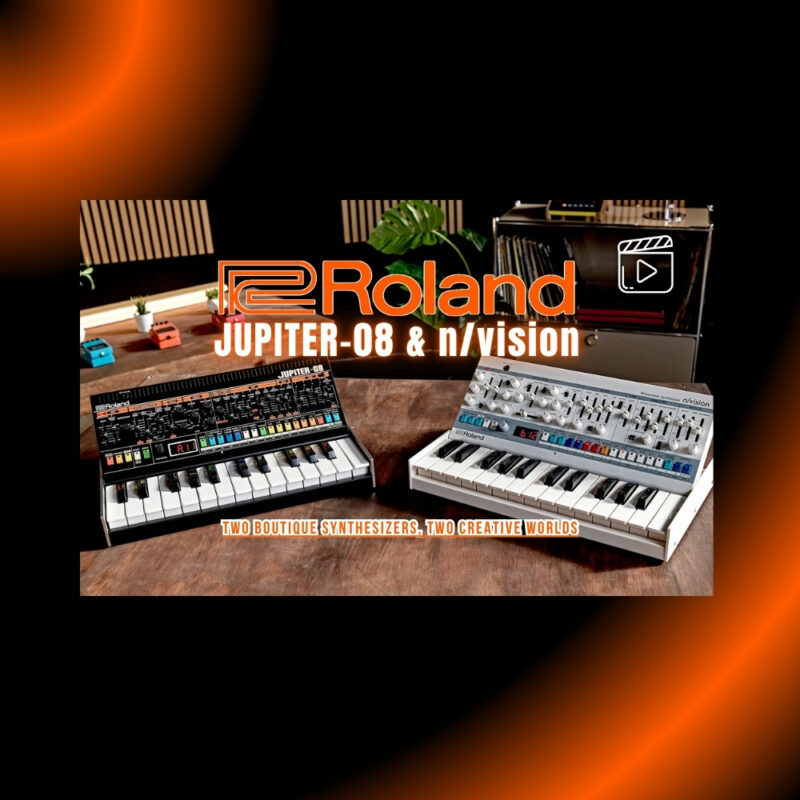
Roland JUPITER-08 & n/vision – Two Boutique Synthesizers, Two Creative Worlds
Roland JUPITER-08 & n/vision – Two Boutique Synthesizers, Two Creative Worlds
Roland is expanding its celebrated Boutique range with two compact synthesizers that bring distinct sound-design possibilities to modern music production and performance. The JUPITER-08 celebrates 45 years of the legendary JUPITER-8, while the n/vision takes classic wavetable synthesis into new territory with advanced modulation, wave shaping and evolving textures.
Both instruments combine hands-on controls, powerful onboard sound engines and modern connectivity in portable designs. With a built-in speaker, flexible battery or USB-C power and an included K-25m 25-note keyboard dock, each is ready for studio sessions, desktop setups, live performance and music-making on the move.
⬇️ ⬇️ ⬇️ ⬇️ ⬇️
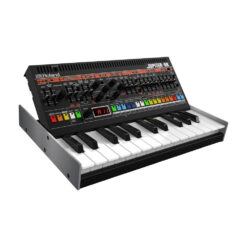
Roland JUPITER-08: A Synth Legend Reimagined
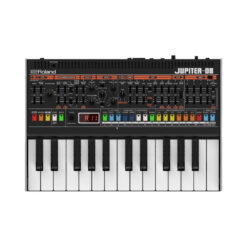
Celebrating the 45th anniversary of the original JUPITER-8, the Roland JUPITER-08 brings vintage-inspired polyphonic sound into a compact, modern instrument. Revered since its introduction in 1981, the original JUPITER-8 helped shape generations of electronic music with its rich pads, expressive leads and distinctive analogue character. The JUPITER-08 honours that legacy with a familiar, hands-on approach, refined pitch behaviour and enhanced voice allocation for an animated playing experience.
The sound engine offers two approaches to polyphony. Its default architecture provides a retro-inspired experience based on the original instrument’s eight-part, two-voice design, while an expanded mode delivers up to 32 voices for more demanding modern arrangements. This flexibility makes it possible to explore classic-inspired tones as well as new sonic possibilities for contemporary productions, soundtracks and electronic performances.


Hands-On Sound Shaping and Performance
The JUPITER-08 puts essential synthesis controls within easy reach, including oscillator and modulation sections, high-pass and voltage-controlled filters, amplifier controls and envelope shaping. Dedicated controls and performance functions encourage immediate experimentation, while Dual and Split modes provide additional ways to combine sounds across the instrument’s playing range. A Hold function is also available for hands-free exploration.
For creating musical ideas, the JUPITER-08 features a two-part, 64-step polyphonic sequencer supporting up to eight notes per part, along with motion recording for capturing parameter changes. Its arpeggiator makes it easy to develop rhythmic patterns, basslines and melodic phrases without programming every note individually.

⬇️ ⬇️ ⬇️
Onboard Effects and Modern Connectivity
The JUPITER-08 includes 17 MFX types, including classic Roland stereo chorus, alongside dedicated delay and reverb processing. The reverb section offers five types and a distinctive shimmer mode that adds octave-shifted colour to the selected reverb. Additional effects include overdrive, fuzz, bit crushing, phasing, filtering and pitch shifting, giving producers plenty of options for shaping sounds without relying entirely on external processing.

Connectivity includes USB-C audio/MIDI for integration with computer-based production, traditional MIDI input and output for hardware instruments, and an external clock input for synchronisation with compatible equipment. Stereo output, headphone and mix-in connections support practical studio and performance workflows. With 240 sound patches and 96 patterns, the JUPITER-08 provides a flexible foundation for building and recalling musical ideas.


Roland n/vision: Explore Evolving Wavetable Sound
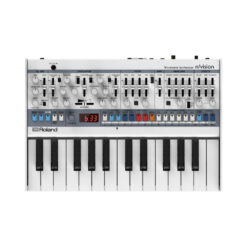
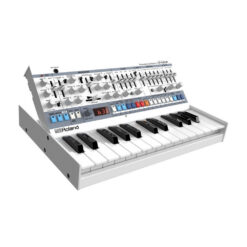
Where the JUPITER-08 draws on a celebrated synthesizer legacy, the Roland n/vision offers a more exploratory approach to electronic sound design. Its wavetable engine uses sequences of digital waveforms that can be scanned and shaped to create moving timbres beyond the familiar foundations of traditional synthesis. From evolving pads and atmospheric textures to aggressive leads and complex harmonic sounds, n/vision is designed for musicians who want their sounds to shift, develop and respond to modulation.
Its two-layer wavetable architecture allows independent layers to be blended and shaped within upper and lower parts. This two-part multitimbral design, with Dual and Split modes, opens up possibilities for combining complementary sounds or building more complex patches. With up to 56 voices of polyphony, depending on sound-generator load, n/vision supports expressive playing and dense arrangements while remaining compact enough for mobile production setups.

⬇️ ⬇️ ⬇️
Advanced Modulation and Wave Shaping
The n/vision provides extensive control over wavetable position, pitch, layer balance and wave shaping through multiple modulation sources. LFO and envelope modulation can introduce movement over time, while random modulation and spread controls offer further ways to create variation and expand the stereo image. Its advanced wave shaper applies nonlinear processing to incoming waveforms, generating additional harmonics and distinctive textures.
A drive-enhanced analogue-modelling filter and multiple filter models inspired by classic synthesizers provide further tonal flexibility. The interface combines immediate front-panel controls for everyday sound creation with deeper menu-driven parameters for more detailed programming. Step LFO functionality, oscillator modulation and motion recording help transform static patches into evolving sounds that can develop throughout a performance or composition.


Sequencing, Effects and Creative Processing
Like the JUPITER-08, the n/vision wavetable synth features a two-part, 64-step polyphonic sequencer with support for up to eight notes per part and motion recording. Its arpeggiator provides another route to creating rhythmic patterns, melodic sequences and animated performances. Together, these tools make it useful for developing musical ideas directly on the instrument, without needing to start in a DAW.
The onboard effects engine includes 17 MFX types, with chorus options inspired by Roland’s classic JUNO sound, plus dedicated delay and reverb. The reverb offers five types and a shimmer mode for adding octave-shifted colour. Further processing includes overdrive, fuzz, drive, bit crushing, lo-fi compression, phasing, filtering and pitch shifting. Combined with wavetable movement and wave shaping, these effects provide an extensive palette for designing distinctive sounds.


Compact Design for Studio, Stage and Travel
Both instruments carry forward the portable design philosophy of the Roland Boutique range. Each includes a built-in speaker and supports power through four AA batteries or USB-C bus power. With the K-25m keyboard dock included, each becomes a standalone mini synthesizer that can be played without needing a separate keyboard controller.
The instruments share a compact footprint of 308 mm wide, 209 mm deep and 54 mm high. Including the keyboard dock and batteries, the JUPITER-08 weighs approximately 1.6 kg, while the n/vision weighs approximately 1.7 kg. Their small size makes them suitable for crowded studio desks, portable rigs and creative sessions away from a conventional studio.
Both models also provide USB-C audio/MIDI connectivity, traditional MIDI input and output, an external clock input, stereo output, headphone connectivity and a mix-in connection. A four-character LED display provides essential visual feedback, while 240 sound patches and 96 patterns give each instrument a useful foundation for storing sounds and sequences. The optional DK-01 Boutique Dock is available separately.


Which Boutique Synthesizer Is Right for You?
The Roland JUPITER-08 is a compelling choice for musicians drawn to vintage-inspired polyphonic sounds, classic-style synth performance and hands-on controls. Its selectable polyphony modes, dedicated modulation and filter sections, built-in sequencing and extensive effects make it a versatile instrument for melodic parts, chords, basslines and expressive electronic arrangements.
The Roland n/vision is aimed at sound designers and producers who want to explore evolving wavetable textures, layered tones, complex modulation and advanced harmonic shaping. Its 56-voice maximum polyphony, dual-layer architecture and wave-shaping tools provide a different creative direction, particularly for atmospheric sound design, contemporary electronic music and experimental production.
Both synthesizers combine distinctive sound engines with portable hardware, onboard effects, sequencing and modern studio integration. Whether you prefer the vintage-inspired character of the JUPITER-08 or the evolving sonic possibilities of n/vision, these new Roland Boutique instruments bring powerful creative tools into a compact format.


👉 Explore the Roland JUPITER-08 and n/vision to discover which approach best fits your music-making workflow. 👇